
Sun, Moon and Stars
Wow Grade 4! What curious scientists you have become! Since starting the National Geographic's Cosmos: A Spacetime Odyssey, you have been asking many thoughtful questions about the wonders of our universe...

Who is Neil deGrasse Tyson?
Neil deGrasse Tyson is an American astrophysicist and host of the science documentary, Cosmos: A Spacetime Odyssey. Our understanding of our universe has most definitely grown and expanded, and has been pushed further after learning more about the mysteries of space.
Read more about Neil deGrasse Tyson's inspiring journey into science that all started when he first met American astrophysicist and astronomer, Carl Sagan.
The History of Science
Take the time to reread your see-think-wonder and/or rewatch on Netfilx, A Sky Full of Ghosts (episode 4 of Cosmos: A Spacetime Odyssey). I wonder, based on the information you have learned, what connections could you make to the history of science?
Discuss the following questions with your parents:
Discuss the following questions with your parents:
- What have the different scientists taught us about our universe? (William Herschel, Galileo, Isaac Newton, James Clerk, John Mitchell, Albert Einstein)
- In what ways have their discoveries helped further our current understanding of space?
Pushing our thinking further...
Let's give a big THANK YOU to Graded's Physics teacher, Mr. Jeff Clark, for coming to our class and answering our many questions about space. Take the time to discuss the questions below with your parents. Make your thinking visible as you ponder your wonderings about our universe!
 |
| "Scientists will say looking at the stars is like looking back in time. And this is true, because the light takes so long to reach us, we’re seeing light that was sent out thousands or millions of years ago." |
We look forward to learning more about space during Mr. Clark's next visit...
Group 1... Classic Basics
- Why do stars shine? Stars shine because they are really really hot. They are so big that little atoms of gas get pushed together and undergo fusion, which heats up the star. Everything hot gives off light: stars, the sun, a light bulb, you. It just depends on how hot.

- How do we know that stars have bodies? We can’t land on the sun, it’s too hot. And it’s not solid anyways. But we can see it’s effect of gravity - its pull on planets and asteroids.
- How is the rising and setting of the sun an illusion? A tricky one! Imagine the sun on the right, and you standing in brazil. See how you move from light, into dark, and back into light, without the sun moving?

- Why is our galaxy called the Milky Way? On a really, really dark night, you can see the Milky Way stretching across the sky. It has a whitish glow, and the Romans called it "Via Lactea" or "Road of Milk", which has now become the "Milky Way."

- Are there dwarf planets smaller than Pluto? Absolutely. There’s no set size for anything, we have tiny asteroids up to giant rocks the size of cities, up to small planets. The 8/9 planets are just the 8/9 largest things orbiting our sun.
- What happens if stars collide into each other? A lot of different things can happen depending on the size of the stars. Sometimes they can crash and destroy each other, scattering gas everywhere. Sometimes they can collide and then reform into a new star, maybe a different type of star. Sometimes they can collide and form a black hole.
- Is there another star that gives Earth light other than the sun? All of the stars do, but only tiny tiny tiny bits of light compared to the sun.
- Will the Crab Nebula ever disappear? Nope. But it could transform and change. It could change into a new star, or change into a black hole, or just stay the same, but it can’t disappear.
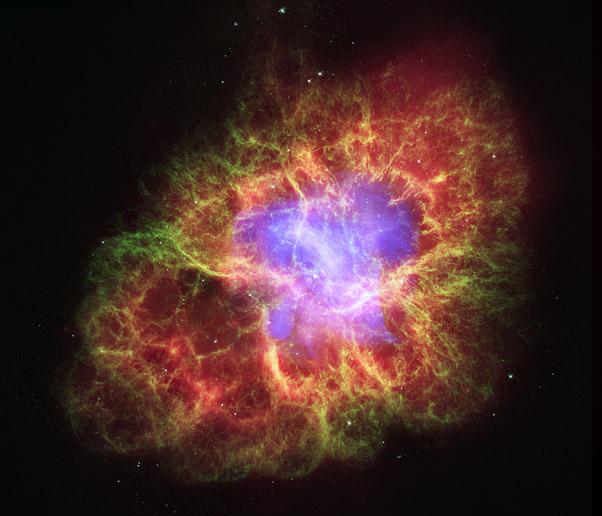
- What would happen if the heart (pulsar) of the Crab Nebula stops moving 30 times a second? Not a lot actually. It could change a little bit the size of the pulsar, but it wouldn’t have a huge effect.
- How do we know that outside of the Milky Way, there are many other galaxies? We can see them with really, really, really good telescopes! Here's another star, and another whole galaxy, and one of 10,000 galaxies!

- How long do stars live? It depends on their size, type and/or mass. We categorize stars by how heavy they are. Light stars can live up to 10 billion years. Really heavy stars might die in few million years. Our own Sun is pretty average in size, and it will likely live for a couple billion years.
- Is there any way we can feel Earth spin? Not that I can think of, but this doesn’t mean no. The best I can suggest is becoming an astronaut and flying up to the International Space Station (ISS)...although, this is a combination of the Earth and the ISS spinning.
- I wonder what star is the furthest from Earth in our Galaxy? How long will it take to get there? An interesting question! I don’t think the particular star has a name, but the Milky Way is about 160,000 light years across, and we’re not quite in the middle, so the furthest side should be about 120,000 light years away.
- What happens if galaxies crash into each other? Basically a lot of little collisions. Galaxies aren't solid, they are made of a lot of stars that are very spread out. So their galaxies would spin them in different directions and make them fly around. But eventually, the gravities should pull all the stars back together into a new galaxy.
Group 2... The Beginning of Weird
- What are the principles of relativity? A big question! Basically, relativity comes from one single assumption, that the speed of light is constant, no matter what. But this assumption has a lot of crazy effects. Einstein figured out these effects in two stages we call Special Relativity and General Relativity.
- Special Relativity: The faster something is moving, the more massive or heavier it becomes. The faster something is moving, the shorter it becomes. The faster something is moving, the slower time goes for it and the slower it ages.


- General Relativity: Time and space interweave, and gravity is mass bending this space-time. It sounds really weird, and is really weird. Maybe this picture can help.

- Why can’t we travel at the speed of light? Relativity says the faster we go, the more massive or heavier we become. The heavier we are, the harder it is to make us go faster. So much so that we become massive than the universe if we get close to the speed of light. If we could travel the speed of light, as we get close, things around us would seem to age very slowly, and everything would look squashed. Everything would look frozen in time, and we would only be able to see in front of us.
- Does gravity affect light? If so, in what ways? Kind of. Gravity affects light in two ways - one directly, one indirectly. Directly, gravity pulls on light. It doesn't slow it down though, it changes its energy (color). Indirectly, because gravity bends space, light won't go in what we see as a straight line.

- Are there any other planets that has forms of life like Earth? Not that we know of. But many scientists think that since there are soooooooo many stars, there must be a star somewhere with a planet with life on it. But it’s really hard to find. Imagine trying to find a specific grain of dirt in São Paulo!
Group 3... The Really Weird
- How do we know black holes exists? Excellent question! So, remember that gravity bends space and time? And therefore, light doesn’t travel in a straight line? We can see this effect. Here’s a great video visualization of it.
- Can we see a star turning into a black hole? Not exactly. This takes a looooong, looooong, loooong time. In fact, stars forming, stars dieing, stars turning into black holes, they all take much longer than our lifetimes. BUT, if we look around the galaxy, we can see a star at each stage, so we can piece it together.
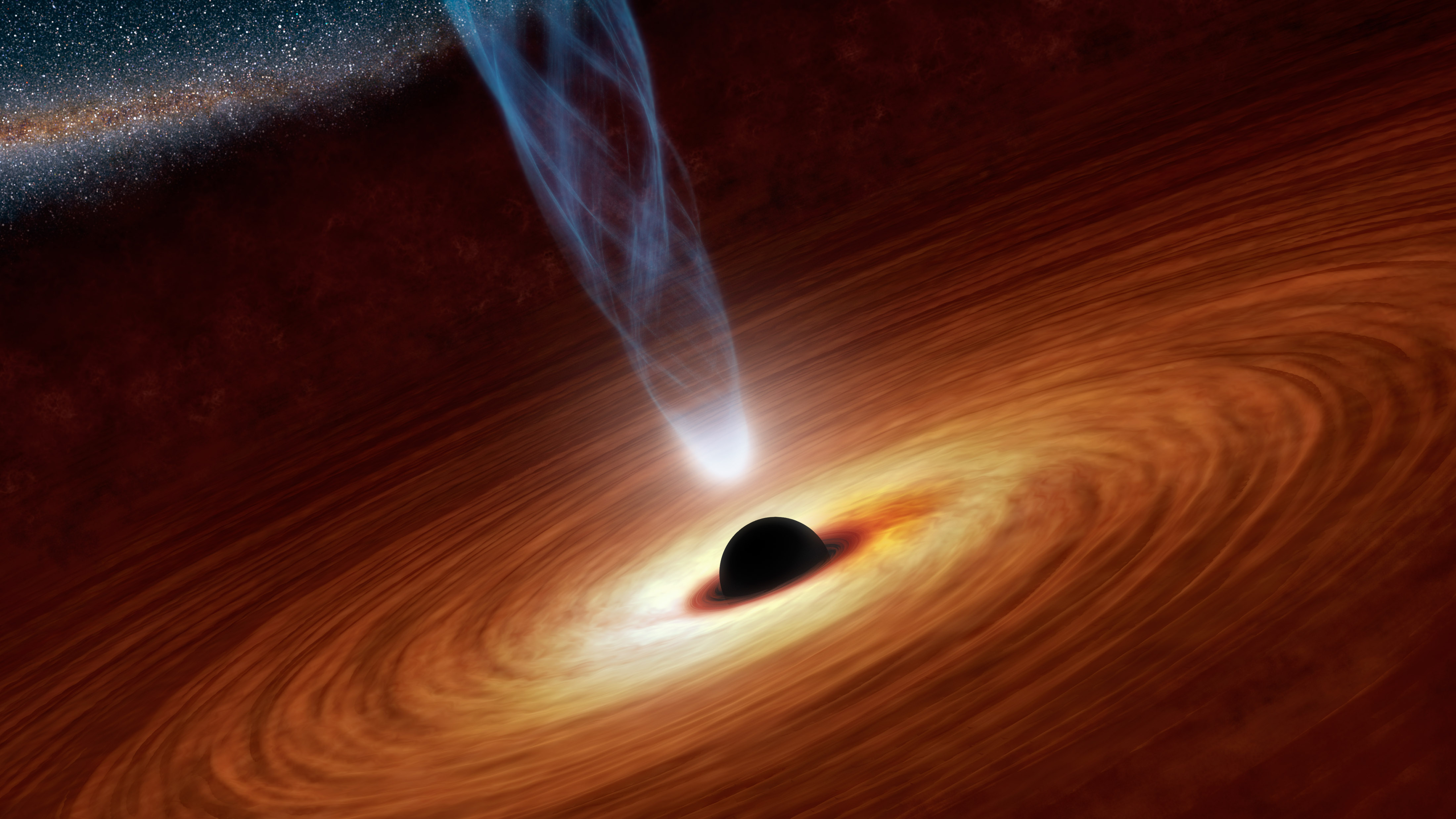
- Is there a black hole bigger than the sun? It depends on what you mean by bigger. Black holes don’t have a size exactly, but they do have mass. And most black holes are much heavier than the sun. A small black hole might be 10 times greater than the sun. Supermassive (a real word) black holes might be 100,000 up to 1,000,000,000 times heavier than our sun.
- How big will a black hole need to be in order to suck in the Milky Way? Interesting. I don’t know exactly, but there are a couple of supermassive black holes in the center of our galaxy, and they only reach a small distance. To pull in the whole Milky Way would be much greater than any amount of mass imagined.
- Do black holes have specific colours? Black holes don’t have colors. No light can escape them, so they are considered black.
- How do we know, if when a star dies, it will turn into a black hole? It mostly depends on the mass of the star. The heavier stars typically turn into black holes or supernovae. Our star won’t die quite so spectacularly. It will grow to be a big, cold star called a red giant, and then collapse into a cold heap called a brown dwarf.
- When a star dies, its light is travelling to Earth. What happens when the light reaches Earth? It depends on how the star dies. But if it is a supernova, we will see it as a really bright star that will last a few days and then disappear. But it brings up an interesting point about stars and light. Scientists will say looking at the stars is like looking back in time. And this is true, because the light takes so long to reach us, we’re seeing light that was sent out thousands or millions of years ago.
- What caused the Big Bang? Nobody knows! There are a lot of theories out there, all more crazy than the next: The Big Bang is just one of billions of universes. The Big Bang happened when a different universe collided with another universe. The Big Bang happened after a previous universe collapsed. We really don't know!

No comments:
Post a Comment